
By Sisley Comish, guest blogger
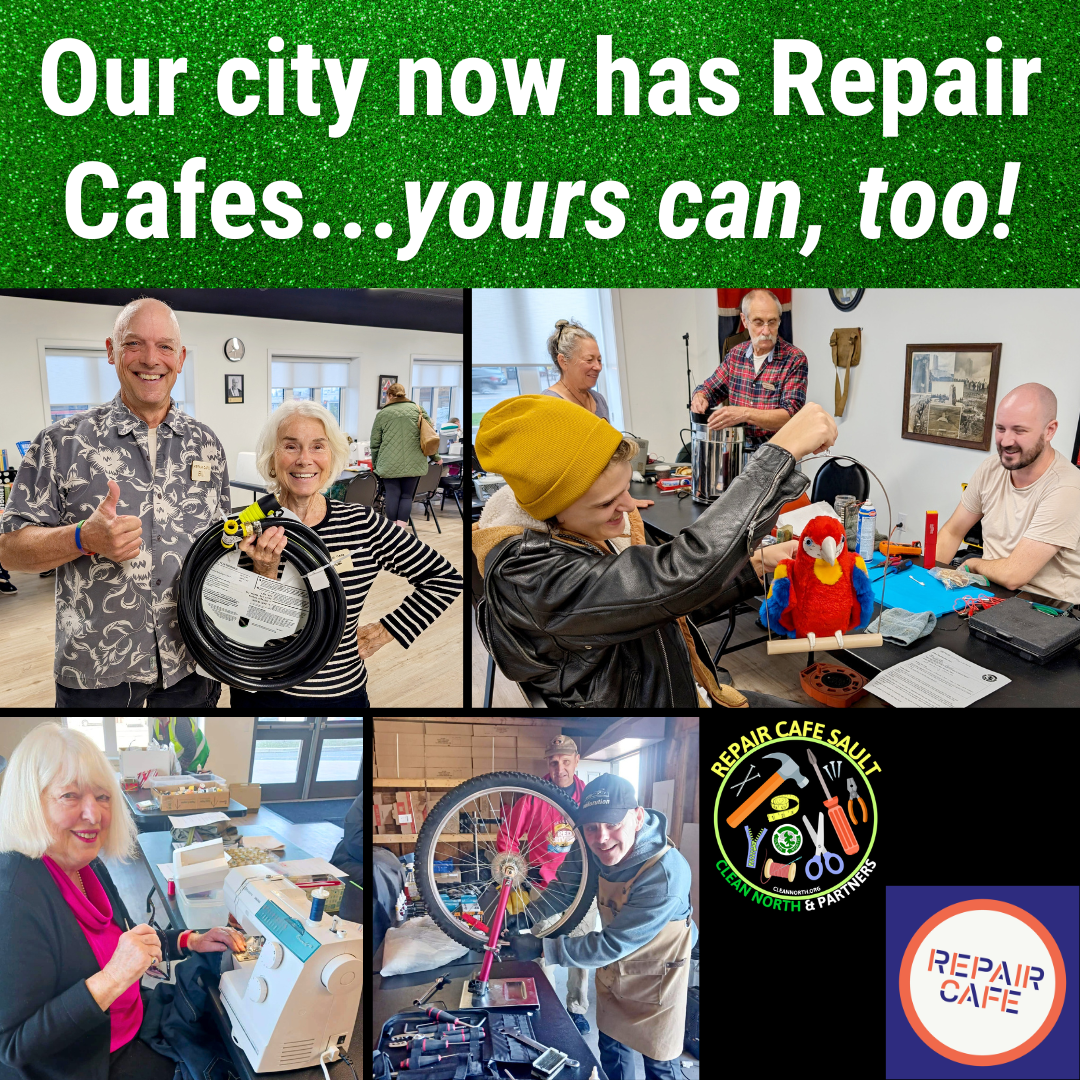
“Organizing a Repair Cafe is not rocket science. You just need a small group of people with a passion for sustainability and some organizational skills—and a few handy folks. The energy in the room during each event is amazing. I highly recommend the experience.” ~ Bill Cole, Chair, Clean North, and Repair Cafe organizer
We all know our communities are filled with amazing people, all with their own skills and talents. Wouldn’t it be wonderful to bring these talents together to help others? A group in Amsterdam thought so too back in 2009 when they started the first Repair Cafe, which has now grown to a global movement aimed at reducing waste and helping to prolong the life of beloved items.
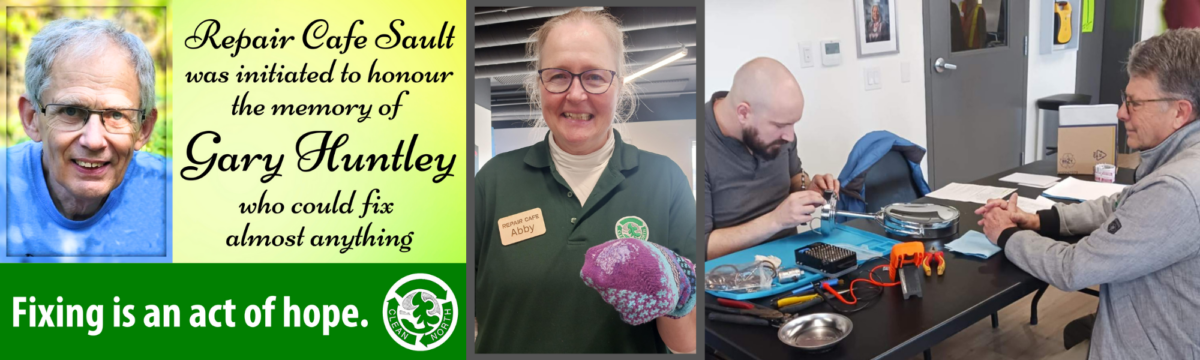
Whether you’re handy, curious, or simply passionate about reducing waste, hosting a Repair Cafe is a rewarding way to strengthen your community. This guide shares practical tips, based on experiences from Sault Ste. Marie events. Our local Repair Cafe movement was inspired by the late Gary Huntley, whose wife Jeanne is the driving force behind Repair Cafe Sault. Gary’s “fix-it spirit” continues to spark local creativity.
Why Join the Movement?
- Sustainability: Extend the life of items instead of throwing them away, which reduces not only waste, but also the need to obtain new items
- Teaching opportunities: Not only are Repair Cafes great to help fix broken items, they provide a great time to learn how to do it yourself
- Community: It is a very positive atmosphere, everyone is smiling, and it brings people joy.
Before you start
Get Inspired & Set Expectations
- Join the Mothership—Check out Repair Cafe International for resources and inspiration.
- DON’T FEAR “FAILURE”! Keep your goals reasonable even if it is not your first repair rodeo. Starting small and building on successes is a great way to keep the potential for more cafes alive.
Budgeting is Your Friend
- There can be hidden costs when it comes to organizing. Don’t forget to include items like office supplies, bins, poster supplies, markers, batteries, glue, sewing supplies etc.
- Look for local grants such as green grant programs or waste-reduction fees—a great way to help cover costs. You can contact your local municipality or other local organizations or companies for green grant programs. For example, we got funding from the City of Sault Ste. Marie and a local office design firm.
- Reach out to potential sponsors and choose partners that align with your values (ex: a local restaurant that is green-minded to provide food for volunteers or a music company to support instrument repairs)
- Request donations of supplies through social media outreach—for example, we generated many donations of sewing supplies this way.
Spread the Word
- Run a quick survey or social media post several weeks ahead of the cafe to see what repairs may be the most popular or needed. Some good bets for your first event: small electrical repairs, fabric/sewing repairs, and knife sharpening.
- Market where your audience already is (e.g., zero-waste Facebook groups, community pages, local media).
- Utilize your volunteers for word-of-mouth publicity for the event. They may be part of like-minded groups—ask them to post on their social media to promote the event or mention it in their everyday lives. Consider creating a Facebook calendar event for each Repair Cafe and have your team invite everyone they know.
- Invite local news outlets to cover the event. With interviews and coverage, this can not only help inform about the event, but spread the word for your next cafe.
Build Your Team
- Confirm availability early; people get busy!
- Suggested roles:
- Coordinating team (3-5 people will do for smaller events)
- “Day of” volunteers:
- Registration clerks/greeter(s)
- Fixers (volunteers with repair skills)
- Traffic controller(s)
- Floater (for supply runs or troubleshooting)
Venue/Other Parameters
- Choose your location carefully—it must be in an optimal location for your audience, have decent access to parking, be large enough to house several repair stations plus registration and debriefing tables as well as have room for volunteers to rest/have something to eat.
- BONUS TIP: We’ve previously held it at a seniors apartment building—a great location for a group that may benefit from the help.
- Choose a spot with outdoor access for dusty or fume-heavy repairs.
- Pick the right time: With the holidays, back to school, and other life events, some months can be very busy. Consider January-May, or October-November as we’ve found these to be times when most people are around.
- Pick the right day: We decided Saturdays would be the best for turnout.
- Set a limit of how many items can be repaired per person. We generally recommend 1-2 items per person, but this will vary with the type of repair (e.g., a person could get several buttons sewed on, but more time consuming electrical repairs might be limited to 1 per person).
At the Cafe
- Ensure volunteers are identifiable (nametags, badges).
- Emphasize teaching, not just fixing. Offer to help people learn the repair process—you know what they say about “if you give a person a fish….”
- Also keep the kiddos engaged with things like colouring books and easy activities while they wait—it can make the experience better for everyone!
- Consider partnering with other organizations with similar goals. For example, we partnered with our local Friends of the Library for used book sales. You may be able to work with other organizations to collect gently used eyeglasses, gently used shoes, blankets and towels for the local animal shelter, etc.
- Prepare a table at the exit with items like a list of local repair vendors, DIY repair tips (the Repair Cafe International website is a great resource), a donation box to help offset event costs, and an invitation to complete an exit survey.
Congrats, You Did It! Now What?
- Saying thank you—this event truly cannot go on without the help of the amazing volunteers so remember to thank everyone who helped. Consider sending thank-you cards to partners/sponsors. Thanking partners and volunteers through social media channels will also be appreciated.
- Hold a quick debrief on:
- What went well?
- What can be improved on?
- What feedback did attendees share?
- Track which repairs were most in demand so your next cafe is even more tailored. For example, electrical repairs were our most popular for both cafes. Sewing repairs were big at our first, but not as much at our second. And knife sharpening was added for our second cafe and was a huge success.
If you have any questions, we’d love to help!
You can email info@cleannorth.org or reach out to us via Facebook or Instagram.