Recycling fails when we collectively give up on it
Since Circular Materials harmonized recycling collection across the province on January 1, 2026, all Ontario communities are working from the same, wider list of accepted materials.
That is progress. For example, here in Sault Ste. Marie, some of the new additions to the list of items we can place in our recycle bin include (but make sure they are clean!):
- Styrofoam (food trays, egg cartons, packaging except for peanuts)
- Prescription bottles
- Toothpaste tubes, hand lotion tubes, deodorant containers
- Black plastic takeout containers
- Yogurt/margarine tubs and their lids
- Spiral cans, cookie dough packages, ice cream containers/tubs, and hot and cold beverage cups
- Soft plastics (important! these go on the fiber (paper/cardboard) side of your bin)
- Bags used for dry cleaning, bread, newspapers and flyers
- Overwrap (paper towel & toilet paper, beverage containers)
- Bubble wrap
- Coffee bags or deli pouches, chip bags, bubble wrap, snack wrappers, cereal liner bags
- Plastic gift bags
What about beer cans and wine/liquor bottles? Please don’t put these in your recycle bin; instead return them to the LCBO, wine store, or beer store. Liquor producers are not part of the consortium that runs regular recycling. They have their own system.
When we recycle all the recyclable things, that’s less pressure on our local landfill. Which, BTW, is headed for a very costly expansion within the next decade. It will cost MILLIONS! The more we divert to recycling, the farther off we can push off the day we have to pay for a landfill upgrade.
For the full list of what we can recycle, check out the Circular Materials website. Note the two streams: Paper and Fiber (goes under grey lid) and Containers (blue lid).
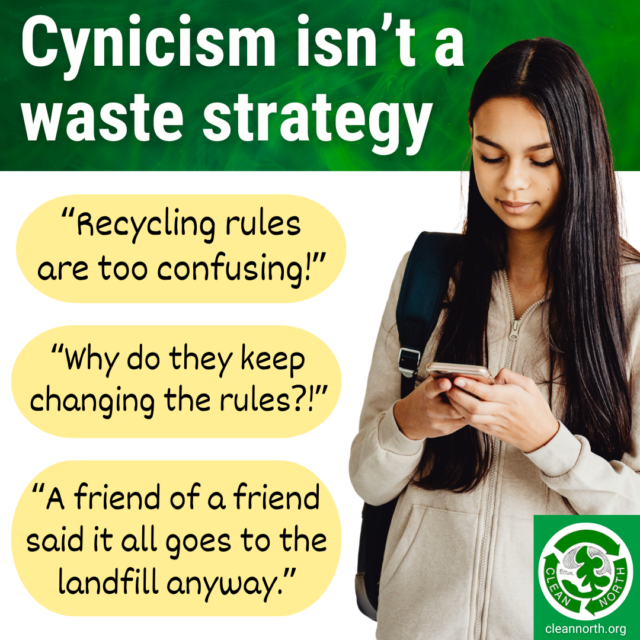
Here’s what’s not helpful: “Why bother? I heard it all goes to landfill anyway”
Almost immediately after the new system launched in January, the rumours started: “It all goes to landfill anyway.”
When we repeat claims like that—especially the classic “friend of a friend” version—we’re not just venting frustration: We’re shaping behaviour.
When people believe recycling is pointless, they stop sorting properly. They stop caring. Contamination increases. Costs rise. More material is rejected. And then critics point to those failures as proof they were right all along.
That’s not accountability. That’s self-sabotage.
It’s fair to ask questions…with a caveat
It’s fair to demand transparency and push for better reporting on end markets and recycling rates. Waste systems should be accountable. But asking for evidence is one thing; spreading rumours is a whole other kettle of fish. Abandoning effort because of unverified claims doesn’t strengthen the system. It weakens it.
Recycling markets are real. Many materials like aluminum, steel, cardboard, and many plastics have commodity value and established end markets.
Are there challenges? Yes. Are there times when loads are rejected due to contamination? Also yes. Is there a lack of clear communication about how much of what we put in our recycle bin is actually recycled and which products have end markets? Yes again!
But that’s not the same as “it all goes to the landfill.”
Cynicism can feel savvy, but it erodes collective efforts that depend on public trust, informed participation, and a shared commitment to improving the system over time. This makes it harder for recycling programs to succeed and for real progress to take hold.
If we want better recycling outcomes, we need two things:
- Institutional accountability
- Public participation
One does not work without the other. Let’s ask hard questions. Let’s expect data. But let’s stop spreading rumours that make the problem worse.
We will keep working to get the answers we are all seeking and share those with you. In the meantime…keep doing your best. Progress, not perfection.
If you have questions…
- Look for verified information from Circular Materials/GFL—contact info below or check out their website; submit queries about end markets and contamination rates
- Look for articles by reputable news organizations
- Share sources—not stories
And finally….system change takes time
Standardizing recycling across Ontario is meant to reduce confusion, maximize end markets, and reduce how much waste is being landfilled. So the more we commit to proper recycling, the stronger the system becomes.
Let’s hold not just Circular Materials accountable but also ourselves. Repeating a rumour is easy. Building a functioning circular economy takes all of us. ♻️
Questions?
For questions related to replacement recycling containers and missed collections, contact GFL Environmental, c33recycling@gflenv.com, 1-833-779-4352.
For other recycling-related questions, contact Circular Materials: customerservice@circularmaterials.ca, 1-877-667-2626. Calling may get you a faster response.